
Active Intelligence 3.0: Wavelength — What It Means for Marketers
ActiveCampaign's newest AI release brings its marketing intelligence closer to the way your team actually works. It can draw on campaigns, automations, performance and account history to surface useful work at the right moment — often before you think to ask for it.
What matters most if you're considering ActiveCampaign
- Get useful ideas before you go looking for them. Active Intelligence can surface recommendations, drafts and timely opportunities based on what's happening in your account.
- Put more of your own marketing context to work. Campaign history, automations, performance, audience behavior and brand information can inform what Active Intelligence recommends, with industry benchmarks adding broader context where applicable.
- Put recurring analysis on a schedule. Scheduled Tasks can run AI-assisted work daily, weekly or monthly.
- Keep a closer eye on your automations. Automation Monitoring can help your team understand automation logic, identify issues and follow the customer journeys you're running.
- Bring outside signals into campaign decisions. External intelligence, industry signals, brand monitoring and web research can add current context to your planning.
- Use AI for more than writing. The release also includes AI Email Translations, Content Performance, AI Image Generation, AI Actions Library and MCP connectivity.
- Keep your team in control. Drafts and recommendations can give you a stronger starting point while the final decision stays with the people who know the customer and business best.
- Our take: Active Intelligence 3.0 looks most interesting for growing marketing operations with enough campaigns, automations and performance history to give its account-aware intelligence something meaningful to work with.
A lot of marketing AI still starts with a prompt. ActiveCampaign is trying to make that experience feel more connected to the work you are already doing.
Active Intelligence 3.0: Wavelength can use what it already knows about your marketing to bring forward a campaign idea, an automation insight, a performance pattern or a timely opportunity. That makes the experience feel closer to having another informed set of eyes on the account.
Active Intelligence 3.0: Wavelength, launched August 26, 2026, advances that experience by bringing more account-aware intelligence into the flow of everyday marketing work.
It uses the context already building inside an ActiveCampaign account — campaigns, automations, performance patterns, audience behavior and brand information — along with relevant external signals to surface work and recommendations before a marketer necessarily goes looking for them.
If we were evaluating ActiveCampaign today, this is where we'd focus first: its AI can work from increasingly rich context about the marketing operation it supports, which can make its recommendations more relevant to the business.
See how Active Intelligence fits the way your team markets
Compare ActiveCampaign's current plans and capabilities with the campaigns, automations and recurring work your team expects to run.
See ActiveCampaign Plans & Features →Affiliate disclosure: PMWorld360 may earn compensation if you use our referral link, while your purchase price stays the same. Our editorial analysis and recommendations remain independently developed.
What could change in a normal marketing week?
Imagine you're running email campaigns, a lead-nurture sequence and several customer automations in ActiveCampaign.
On Monday, an automation insight gives you a timely view into one of your customer journeys. With Active Intelligence 3.0: Wavelength, Automation Monitoring can help you understand the automation logic and identify issues from within the automation canvas.
On Wednesday, you're planning the next campaign. Active Intelligence may already have a draft or idea informed by your account activity and the patterns that have been working.
Friday is reporting day. A Scheduled Task you've configured can run recurring work on the cadence your team has chosen.
Then something changes outside your business — an industry development, seasonal opportunity or another relevant signal. External intelligence can bring that information closer to the campaign-planning workflow.
You still make the decisions. The difference is that more of the watching, gathering and preparing can happen before the decision reaches you.
Why ActiveCampaign is moving toward proactive marketing intelligence
Marketing teams have embraced AI quickly, and the next opportunity is putting that intelligence to work across everyday marketing operations.
The American Marketing Association's reporting on the 35th CMO Survey found that marketers have nearly doubled their use of AI over two years. Among 308 senior marketing leaders surveyed, AI was being used for content creation by 73.9%, personalization by 65.4%, automation by 48.9%, data analysis by 46.3% and targeting by 45.2%.
Gartner's 2026 CMO Spend Survey found that CMOs are allocating an average 15.3% of marketing budgets to AI initiatives, a clear sign that AI has become a meaningful part of marketing investment.
Together, those figures show a market moving quickly from AI experimentation toward deeper day-to-day use. The opportunity now is to connect AI with the campaigns, customer journeys and decisions marketers already manage.
ActiveCampaign's answer is to make AI part of the account itself so intelligence can sit directly alongside the campaigns, automations and customer engagement work marketers already manage.
What is Active Intelligence 3.0: Wavelength?
Active Intelligence 3.0: Wavelength is the first named release of ActiveCampaign's Active Intelligence platform.
ActiveCampaign organizes the release around 12 capabilities across three pillars — External Intelligence, Autonomous Actions and Advanced AI — supported by one shared context layer.
The underlying idea is straightforward: give the AI enough context about the account that its recommendations become more specific to the business.
That context can include your history, campaigns, automations, platform usage, performance patterns, audience behavior and brand information. Active Intelligence can then use that context to help with the next action and carry useful account knowledge into future work.
That distinction matters if you're trying to decide whether ActiveCampaign's AI is genuinely useful or simply another writing assistant. Writing an email is helpful. Bringing forward a relevant campaign idea based on what has already happened in your account can be much more useful.
Account context is the foundation
One of the most important parts of the release sits underneath the visible features: the shared context layer.
Active Intelligence 3.0: Wavelength operates with a shared context layer. It gives ActiveCampaign's AI capabilities a common foundation of account knowledge, so campaign history, performance, automations and brand context can contribute to the same working picture.
Campaign history can provide context. Performance can provide context. Automations can provide context. Your brand can provide context. Adaptive Memory can carry useful information forward, while Industry Benchmarks can add a broader reference point where applicable.
Brand Kit, custom instructions and memory can further strengthen that context, helping Active Intelligence work from information that better reflects the account and the way your team operates.
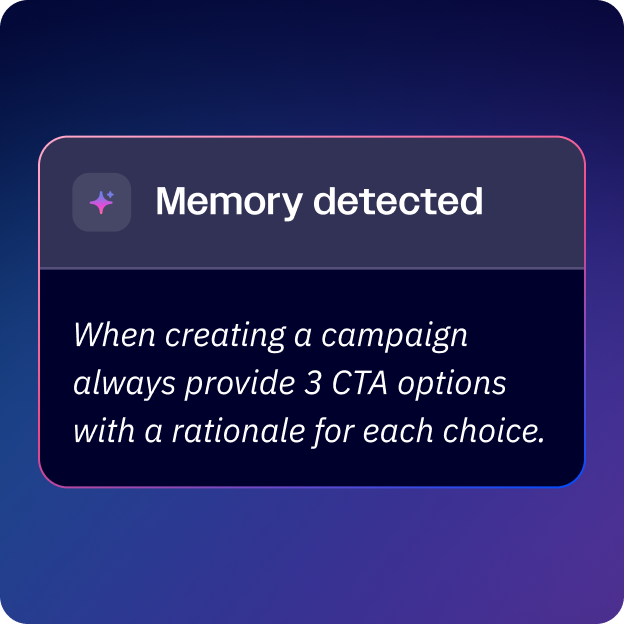
That becomes more valuable as an ActiveCampaign account matures. A business that's been running campaigns and automations for months or years has accumulated information about what it sends, how people engage and how its marketing operates. Active Intelligence is designed to put more of that history to work.
Start your next campaign with more to work from
When you're deciding what to send next, Proactive Drafts and Ideas can give your team something relevant to react to instead of starting with an empty campaign.
Active Intelligence can surface an idea or prepare a campaign draft based on what's happening in your account. You review it and decide whether it deserves to go any further.
If we were trialing ActiveCampaign today, we'd judge Proactive Drafts and Ideas by relevance. A campaign suggestion becomes genuinely useful when it reflects your audience, recent activity and performance history — and that account grounding is the appeal here. That account context can help Active Intelligence move from an insight or idea toward a more relevant campaign starting point.
You have plenty of campaign data. What should you act on?
You probably already know how the last email performed. The harder question is what months of campaign history are actually telling you about what to do next.
Content Performance looks for patterns across messaging, creative and subject lines to help identify what is associated with engagement and where fresh creative opportunities may be emerging.
The more campaign history you have, the more useful this can become. As that history grows, Active Intelligence has more patterns and performance context to draw from.
Industry Benchmarks add another reference point by comparing open and click performance with relevant benchmarks. That can help you distinguish an isolated result from a pattern that deserves closer attention.
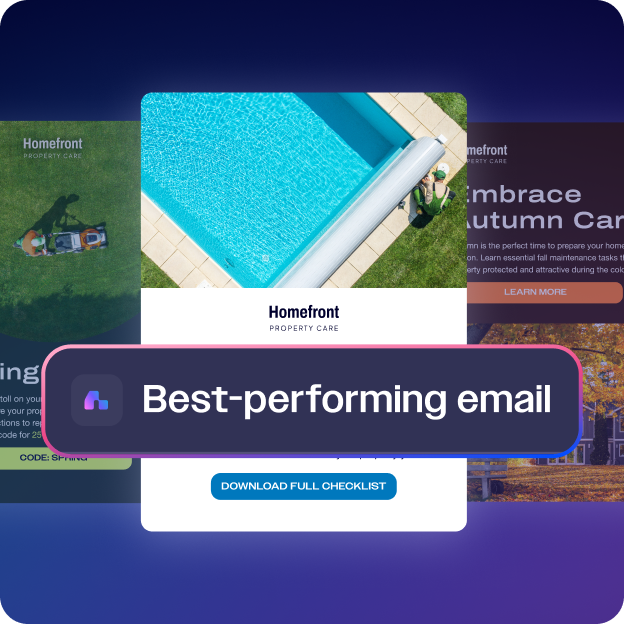
That opens up a more useful question: “What are our campaigns teaching us?”
Put recurring marketing checks on a reliable schedule
Think about the questions your team comes back to every Friday or at the end of every month. Scheduled Tasks can put some of that recurring analysis on a dependable cadence.
You can take recurring Active Intelligence work and schedule it daily, weekly or monthly. A weekly performance review is an obvious example. So is checking for changes in engagement, generating recurring campaign opportunities, or running recurring analysis.
These are exactly the kinds of recurring jobs that shape a well-run marketing operation. Putting them on a reliable cadence gives teams more consistent intelligence to work from.
See where ActiveCampaign could support work your team already does
If recurring reporting, campaign planning and automation monitoring already play a meaningful role in your team’s week, compare those workflows with ActiveCampaign's current capabilities.
Compare ActiveCampaign Plans →Affiliate disclosure: PMWorld360 may earn compensation if you use our referral link, while your purchase price stays the same. Our editorial conclusions remain independent.
Keep a closer eye on growing automation workflows
As your automations grow, Automation Monitoring gives your team another way to understand how those workflows are operating and spot areas that may need attention.
Within the automation canvas, Active Intelligence can help marketers understand automation logic and identify issues that may need attention.
Automation Patterns adds another layer by identifying structures and approaches that have consistently produced results within an account. As your team builds more customer journeys, that can make proven approaches easier to recognize and reuse.
If automation is one of the main reasons you're considering ActiveCampaign, we'd look closely at this capability during your evaluation. The ability to generate another email is convenient. The ability to help watch the marketing infrastructure running behind dozens of customer journeys may matter more.
Bring market changes into your next campaign decision
Your next campaign can be shaped by more than what's happening inside your CRM. A competitor changes pricing. Your website messaging shifts. A seasonal opportunity appears. Active Intelligence can bring some of that outside context closer to the decision you're making next.
Active Intelligence 3.0: Wavelength can also work with relevant external information through capabilities including External Signals, External Intelligence and Brand Monitoring.
Brand Monitoring, for example, can bring changes in your own website content, messaging and promotions into the picture, while external signals can add timely market context to campaign planning.
We especially like the way this brings sourced external information closer to the campaign workflow. It connects what's happening in the market with what ActiveCampaign already knows about your own campaigns and audience.
Turn an approved creative direction into a working campaign
Campaign Generation and Editing gives marketers another practical way to move from an existing idea or design reference into campaign production.
ActiveCampaign says Active Intelligence can generate a campaign that mirrors the design of an email screenshot, webpage or PDF. Marketers can then edit the generated campaign, including individual blocks and columns, before deciding what is ready to use.
For teams that already have approved creative references, landing pages or campaign examples, that can provide a faster starting point while keeping the marketer responsible for the final content, design and send decision.
Multi-Asset Analysis can evaluate copy, imagery and structure together as a complete campaign. That matters because your audience experiences the campaign as a whole, not as a collection of isolated assets.
Take campaigns into more languages and markets
If your audience spans multiple markets, translation becomes an operational issue quickly. AI Email Translations is worth examining in that context.
ActiveCampaign says the capability supports 75+ languages and can translate subject lines, email content and calls to action while maintaining the underlying email structure. Performance can also be reviewed by translated version.
That can simplify the mechanics of multilingual campaigns while giving regional and brand teams a strong starting point for the final cultural and linguistic review.
Move campaign visuals from idea to execution faster
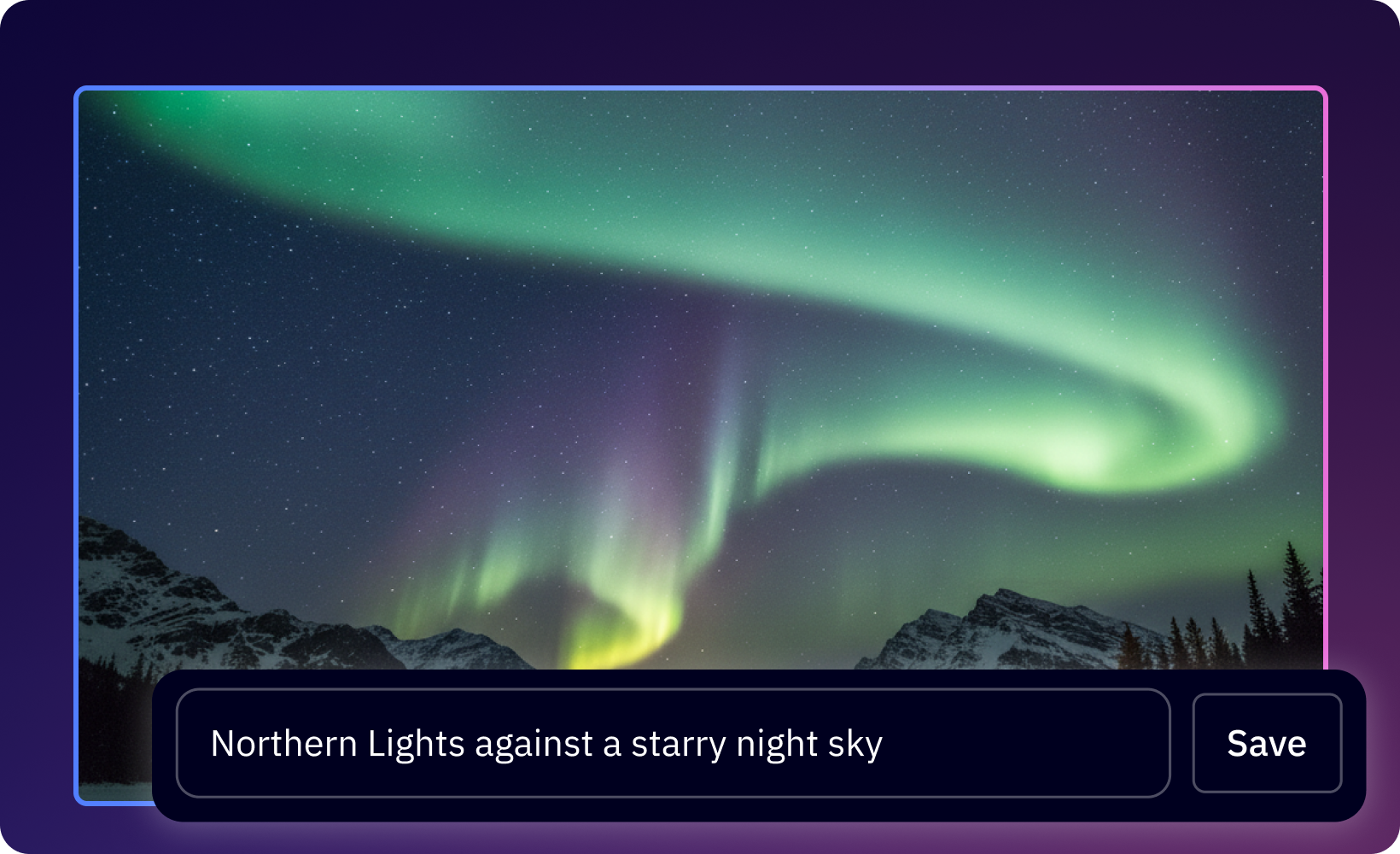
When campaign ideas are ready before your creative team is, production can become the bottleneck. ActiveCampaign brings AI Image Generation into its campaign workflow, with Brand Kit information providing additional context.
We see the strongest value in proximity: creative generation sits closer to the campaign, Brand Kit information and the marketing activity it supports. That can make it easier to move from an idea to a campaign-ready visual within the same working environment.
Bring ActiveCampaign context into the AI tools your team already uses
If ChatGPT or Claude is already part of your team's day, ActiveCampaign's MCP connectivity can extend supported ActiveCampaign context into compatible AI environments, including ChatGPT and Claude.
That can allow supported ActiveCampaign information and actions to become available from AI tools your team may already use.
For teams already spending a meaningful part of the day inside an AI environment, that connectivity can make ActiveCampaign feel more naturally integrated into the way work already gets done.
Active Intelligence 2.8 vs. Active Intelligence 3.0: Wavelength
If you've been researching ActiveCampaign for a while, older articles may still refer to Active Intelligence 2.8. Here's the practical difference:
| Active Intelligence 2.8 | Active Intelligence 3.0: Wavelength |
|---|---|
| Focused on improving AI-assisted, prompted campaign work | Moves further toward proactive, context-aware intelligence |
| Marketers primarily initiate AI-assisted work | Can surface recommendations, drafts and actions before a marketer asks |
| Uses available campaign and account context to support prompted work | Draws more broadly on account history, automations, performance patterns, audience behavior, brand context and relevant external signals |
| AI assistance is centered more heavily on individual requests | Adds recurring intelligence through Scheduled Tasks and proactive monitoring |
Active Intelligence 3.0: Wavelength builds on Active Intelligence 2.8, moving beyond primarily prompted campaign assistance toward more proactive, context-aware intelligence.
There's another terminology change to know about: the former AI Prompt Block is now the AI Actions Library. AI Activities is being deprecated as usage transitions toward ActiveCampaign's Premium AI credit framework.
Who may get the most value from Active Intelligence 3.0: Wavelength?
Active Intelligence 3.0 looks especially well suited to businesses building an active marketing operation, where campaign history, automations and recurring analysis give its account-aware intelligence more context to work with.
Worth a closer look if you…
- run regular email and lifecycle campaigns;
- expect to build several or many automations;
- have enough campaign history that patterns are hard to review manually;
- want recurring marketing analysis to happen consistently;
- need recommendations informed by your own account history;
- operate across multiple languages or markets; or
- already use AI environments such as ChatGPT in daily work.
Especially useful as you grow into…
- a more frequent campaign cadence;
- richer lifecycle and customer automations;
- a growing history of campaign performance;
- more recurring analysis and reporting; or
- a team workflow that can act on proactive recommendations.
The common thread is activity. The more meaningful marketing context ActiveCampaign has to work with, the more interesting account-aware intelligence becomes.
Five questions we'd use to get the most from an ActiveCampaign evaluation
- How much marketing activity will actually live inside ActiveCampaign?Account-aware intelligence becomes more interesting when there's meaningful context for it to use.
- Which recurring tasks could we realistically automate?Identify the reports, analyses and checks your team repeats today.
- How important are automations to our customer journey?If they'll play a major role, Automation Monitoring and related intelligence deserve more weight.
- Where could proactive recommendations help our team move faster?Match the capability to the decisions your team makes most often.
- Which Active Intelligence capabilities align with our account and plan?Availability can vary by account and capability, so check what's currently included as you plan your rollout.
The real upgrade is richer context around your marketing
For us, the most compelling part of this release is how the capabilities work from a richer base of account context.
What stands out to us is the amount of marketing context ActiveCampaign is putting behind the AI. That gives it a chance to be useful before you formulate the next prompt.
It can learn from account history, watch automations, review performance, bring in outside information, run recurring tasks, surface an opportunity and prepare a draft — then hand the decision back to you.
Your marketers remain the people who understand the customer, the business and the moment best. Active Intelligence 3.0: Wavelength gives them a better-informed starting point and more useful context when it's time to decide what happens next — with the larger goal of creating more relevant marketing and stronger audience engagement.
Where Active Intelligence 3.0: Wavelength could fit in your ActiveCampaign evaluation
If you're evaluating ActiveCampaign for email marketing and marketing automation, Active Intelligence 3.0: Wavelength gives you another substantive area to evaluate, particularly if you expect to run enough campaigns and automations for account context to become valuable.
We'd start with the work your marketing team already does repeatedly and the decisions that depend on campaign and automation data. From there, look at where Active Intelligence could make that work easier to manage, surface useful opportunities and give your team a stronger starting point.
If there's meaningful overlap, compare ActiveCampaign's current plans and Active Intelligence availability with your requirements.
See if ActiveCampaign fits your marketing operation
Start with your real workflows — email, lifecycle campaigns, automations, recurring analysis and team processes — then see where Active Intelligence 3.0: Wavelength could add practical value.
See if ActiveCampaign fits your team →Affiliate disclosure: PMWorld360 may earn compensation if you use our referral link, while your purchase price stays the same. Our editorial analysis and recommendations remain independently developed.